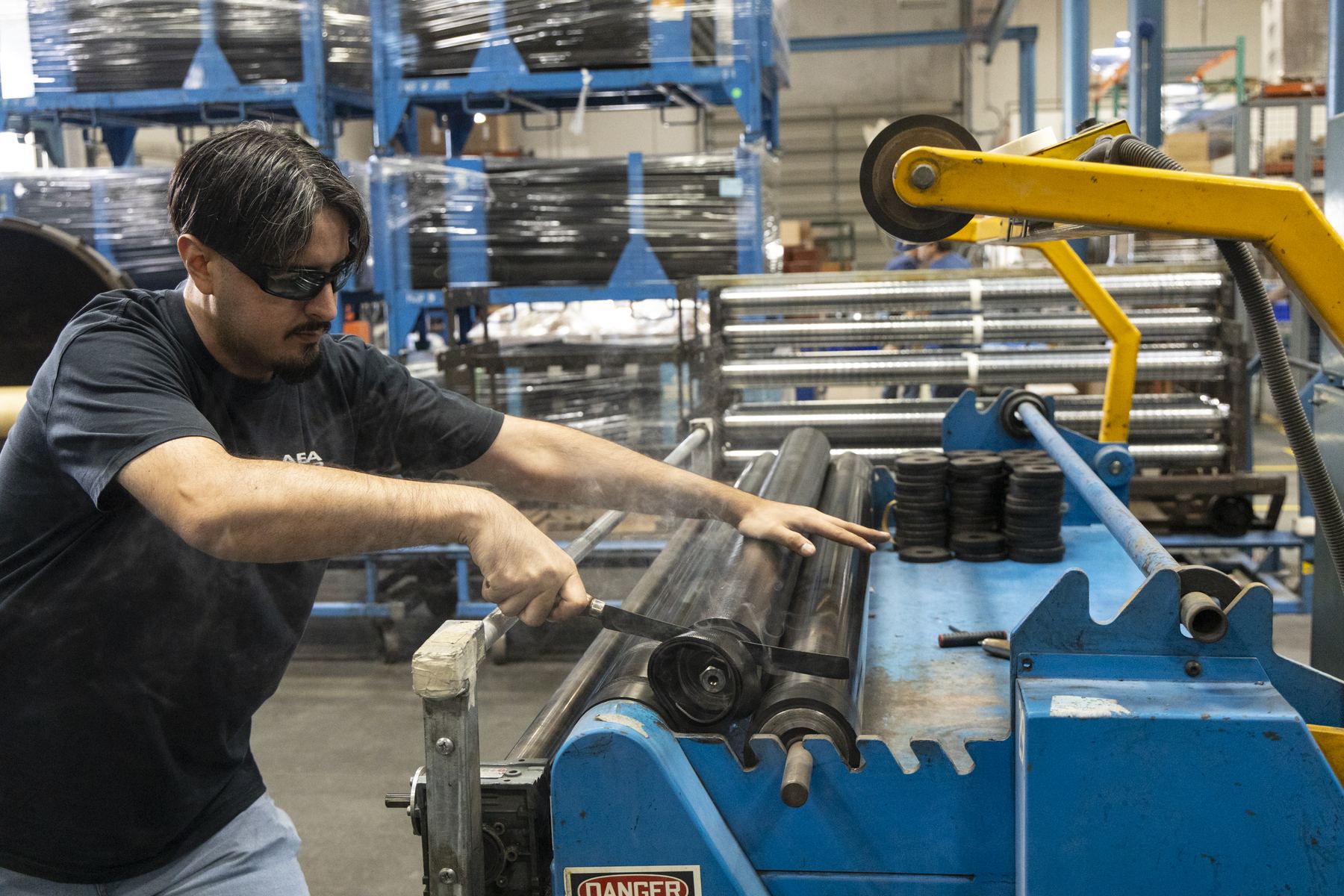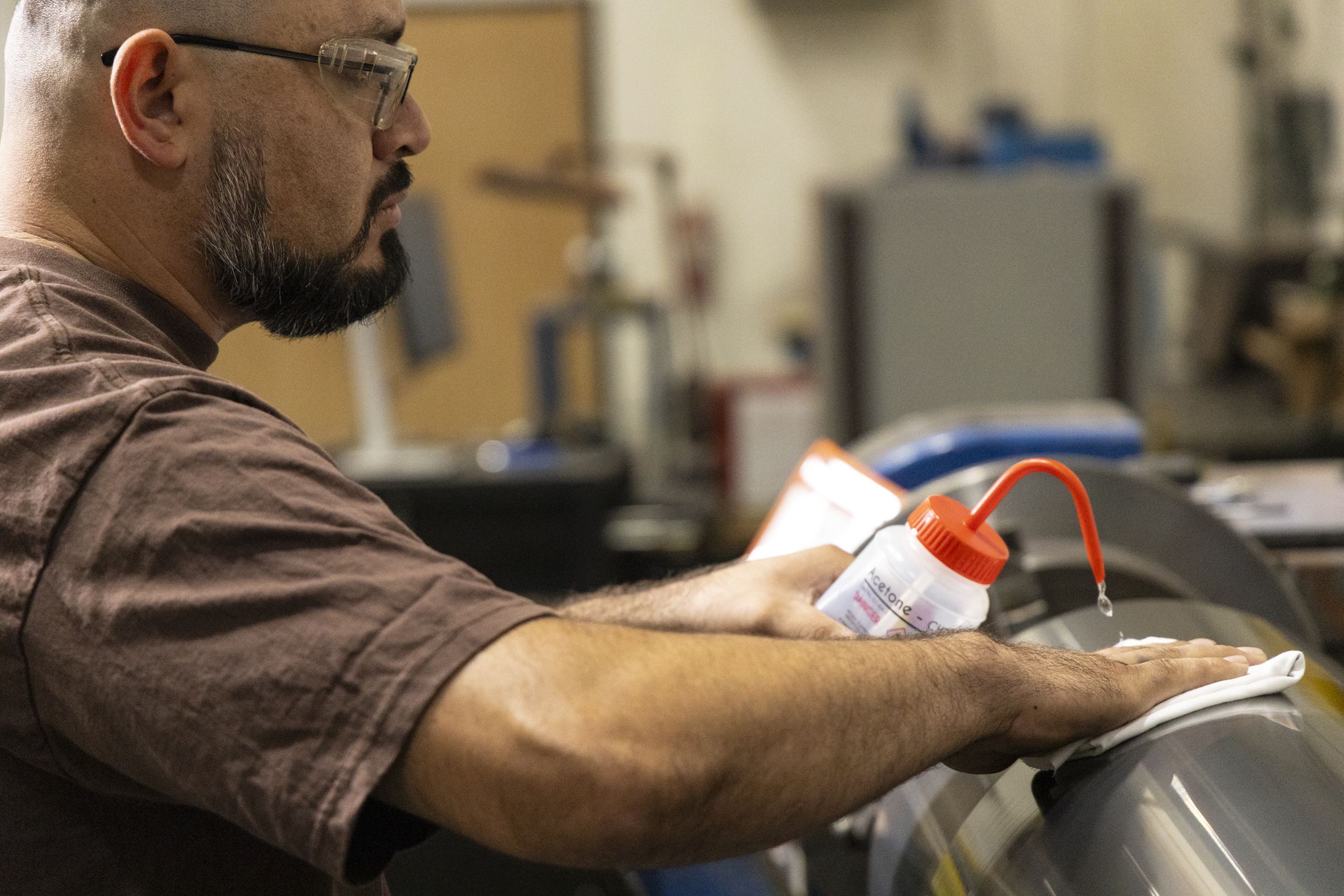

Recover, Repair & Reconditioning

Do You Need a New Roller, or Can Yours Be Restored?

Since 1959 Recovering Rollers in Ontario, CA
Any OEM’s Roller Restored to Original Spec
Our Own Rubber-Chemistry Lab Sample Tested, Compound Matched
Verified Before It Ships Every Critical Tolerance
ISO 9001:2015 Quality Management

The Recover Cycle

Recovered on Schedule. Failing on Schedule.

It’s a familiar cycle. A roller wears out every month. It goes out for a recover, comes back looking new, and wears out again a month later. The cover was replaced. The cause wasn’t.

A recover puts material back on the core. If that material is the same compound that was failing before, you’ve paid to reset the clock, not to fix anything. Meanwhile the line absorbs the change-outs, the scrap before each one, and the risk that the next failure lands on a day you don’t have a spare.

Why ABBA

Built Like an Engineering Partner. Responsive Like a Local Vendor.

Your roller is part of a larger process, so that is where we start. We work to understand your line at the application level: the chemistry, temperature, speed, tolerance, and wear behind each position, then engineer the roller around it, drawing on 2,000+ proprietary formulations we own and mill in house. National suppliers bring scale. Local shops bring speed. ABBA brings the combination your line actually needs.

In-House Material Development
Application Engineering & Review
Reverse Engineering & Design Support
Verified Tolerances
Approval Drawing Sign-Off
Responsive Lead Times & Expedite Options
Request a Roller Evaluation

Root Cause First

A Recover Is Only as Good as the Material That Goes Back On.

Before we put a new cover on your roller, we work out why the old one failed.

We Look At What It Tells Us What Changes
The old cover (cut sample, lab-tested) What it’s made of, and how it broke down: wear, swelling, cracking, hardening, bond failure Whether to match it or replace the compound
The running conditions Temperature, chemistry, speed, load, and what the roller contacts The compound and hardness engineered for those conditions
The core and geometry Whether the core, journals, and profile are sound What repair or regrind the roller needs before it’s covered
The result you want Wear life, surface, and tolerance targets The grind, finish, and inspection spec it ships to

Then the new cover is mixed and batch-tested in our own lab, applied, cured, ground on CNC cylindrical roll grinders, and verified before the roller ships back. The goal is to change the replacement cycle, not repeat it: when a roller has been wearing out monthly, the right compound can often stretch it to two or three months or more.

Decision Guide

Restore or Replace?

Restoring Usually Makes Sense When:

  • The core, shaft, and journals are structurally sound
  • The problem is on the surface: a worn, cracked, swollen, or damaged cover
  • The roller is out of round or out of profile but has enough material to regrind
  • Chrome is worn, pitted, or scratched but the base metal is intact
  • You want to keep an OEM roller in service without redesigning it

Replacement Usually Makes Sense When:

  • The core is cracked, bent beyond correction, or badly corroded
  • Journals or bearing seats are too worn to repair cost-effectively
  • The roller design itself is causing the problem
  • The OEM part is obsolete, or the shop that made it is gone
  • You need a design change for a new process, speed, or material

Getting it wrong costs either way. Replace a roller that could have been restored, and you’ve paid for a new core you didn’t need and waited weeks longer for it. Restore a roller whose design is the problem, and you’ll be back in a month. The inspection exists to make the call on evidence.

Not sure? That’s what the evaluation is for. We inspect the roller and give you a straight answer.

Field Checklist

Signs Your Roller Needs Attention.

Before you call anyone, walk the roller. These are the signs our engineers look for first.

What You See or Measure What It Usually Means Likely Fix
Cover is cracked, chunked, or separating at the ends Cover failure or bond failure Recover
Cover is soft, tacky, or swollen Chemical attack; the compound doesn’t suit the chemistry Recover in a different compound
Cover is glazed, hard, or shiny Heat aging or surface glazing Regrind, or recover if too hard
Product shows a defect every rotation Runout, out-of-round, or a damaged spot Regrind
Wrinkles or uneven pressure across the face Crown or profile worn out of spec Regrind to profile
Chrome is pitted, scored, or flaking Plating wear or corrosion Recoat
Noise, vibration, or play at the ends Journal or bearing seat wear Repair
Roller won’t hold straight on the line Bent or damaged core Inspect for repair or replacement

Photos of any of these help us quote faster.

Services

What We Do.

Six services, one rule: the roller gets what it actually needs, and nothing it doesn’t.

  • Roller Repair

    Fix the damage, not just the surface.

    Some rollers need more than a new cover. We repair the mechanical side too.

    Repairs Include

    • Journal repair and rebuilding
    • Re-stubbing (replacing shaft ends)
    • Core body repair
    • Bearing seat restoration
    • Damage found during incoming inspection

    Fabrication, re-stubs, core body repairs, and journal repairs are performed in-house.

  • Regrinding

    Restore geometry and finish without a full recover.

    If the cover is still healthy but the roller is out of round, out of profile, or worn on the surface, a regrind may be all it needs. We regrind on CNC cylindrical roll grinders back to diameter, TIR, cylindricity, and profile specs, including grinding in the roller’s own bearings where the application calls for it.

    Regrinding Can Correct

    • Out-of-round and runout
    • Profile and crown wear (roller crown restoration)
    • Surface glazing, scoring, and minor damage
    • Uneven wear across the face

    Regrinding is typically the fastest and lowest-cost way back into service. It’s also how we handle calendar roller refurbishment for battery lines, where geometry and finish are the whole job.

  • Recoating

    Restore hard surfaces and plating.

    Chrome and plated rollers wear too. Recoating strips worn or damaged plating, restores the base surface, re-plates, and finishes the roll back to spec. We manage the full job and verify the finished roll before it ships.

    Recoating Covers

    • Hard chrome strip and re-plate
    • Nickel re-plate
    • Finish restoration, including mirror finishes
    • Chill, heat-transfer, backing, and coating rolls
    Surface Finishes and Coatings
  • Core Inspection

    Know what you’re working with before you spend money.

    Every incoming roller is inspected before work begins. It’s how we decide whether restoring makes sense and what the roller actually needs.

    We Inspect

    • Core straightness and runout
    • Journals and bearing seats
    • Shell condition, corrosion, and cracks
    • Cover condition and bond
    • Diameter, profile, and surface

    If we find more damage than expected, we contact you before we proceed. No surprises on the invoice.

  • Replacement Recommendations

    A straight answer when restoring isn’t the right call.

    Sometimes the right recommendation is a new roller: the core can’t be saved, the design is the root cause, or the original part no longer exists. When that’s the case, we’ll recommend replacement and build it.

    We Can

    • Reverse-engineer the existing roller
    • Build to OEM or customer drawings
    • Improve the design for your current process
    • Put an approval drawing in front of you to sign off before production starts
    Find the Right New Roller

The Real Cost

What the Recurring Failure Is Really Costing You.

Downtime on a Precision Line

$10,000 – $100,000+ per hour

Downtime on a precision line, and scrap costs the same revenue. A roller that fails monthly doesn’t cost you twelve recovers a year. It costs you twelve change-outs, the scrap that builds before each one, and every hour the line waits when a failure lands without a spare.

What the Right Restoration Changes

  • Fewer Change-Outs

    A cover engineered for the conditions lasts longer between recovers.

  • Lower Cost Than New

    You reuse the core, shaft, and journals, the most expensive parts of the roller.

  • Shorter Lead Time

    No full fabrication when the core is good.

  • OEM Geometry Kept

    Restored to original spec, or improved where the spec was the problem.

  • A Spares Plan That Works

    Predictable wear life means you can rotate spares instead of scrambling for them.

Tracked, Not Estimated.

On serialized lines we log how many times each roller has been recovered and how long every cover lasted, so the wear-life claim above comes from the record, not a guess.

Seven Steps

How Reconditioning
Works.

A typical recover runs about three to four weeks, depending on size and shop load. Expedite is available on request and review.

Tell Us About the Roller.

Dimensions, drawings, cover material, and the problem you’re seeing. Photos help. Or request a roller evaluation and an engineer will review it.

  • Dimensions
  • Drawings
  • Cover Material
  • Photos

Get a Quote.

We quote the work from what you’ve shared.

  • Quoted From What You Share

Ship the Roller In.

Most rollers arrive by LTL freight. Local pickup is available in some areas.

  • LTL Freight
  • Local Pickup in Some Areas

Incoming Inspection.

We inspect the core, journals, cover, and geometry. If we find additional repairs, we contact you before proceeding.

  • Core
  • Journals
  • Cover
  • Geometry

Material Matching.

We cut and lab-test a sample of your existing cover to match or improve it.

  • Cover Sample
  • Lab Tested
  • Matched or Improved

Restoration.

Recover, repair, regrind, or recoat to spec.

  • Recover
  • Repair
  • Regrind
  • Recoat

Final Inspection and Return.

Rollers are verified before they ship back to you.

  • Verified Before Shipment

Working With ABBA

The ABBA Engineering Promise

  • An engineer looks at your roller, not a salesperson reading a script.

  • We tell you what it needs, and what it doesn’t. Including when a new roller is the better investment.

  • No surprise work. If inspection finds more, you hear about it before we do it.

  • Your cover is matched or engineered to your conditions, not pulled off a shelf.

  • Your drawings and specs stay protected. We work under NDA as standard.

  • The roller evaluation comes with a full report of what we found.

Switching Shops

Lost the Shop That Used to Recover Your Rollers?

A lot of long-standing local roller shops have closed, consolidated, or stretched their lead times. If yours did, we can pick up where they left off. We can work from the roller itself when the original drawings aren’t available, and document it with an approval drawing so you’re not stuck again.

A large roller being reconditioned in the ABBA shop

FAQs

Recover, Repair & Reconditioning: Common Questions

Is It Cheaper to Recover a Roller Than to Buy a New One?
In most cases, yes. If the core, shaft, and journals are sound, recovering reuses the most expensive parts of the roller and skips full fabrication.
How Do I Know if My Roller Can Be Recovered?
Send us the roller information or the roller itself. Incoming inspection checks the core, journals, and geometry to confirm whether restoration makes sense before any work starts.
What’s the Difference Between Recovering and Regrinding?
Recovering replaces the cover entirely. Regrinding restores the geometry and surface of the existing cover without replacing it.
Why Does My Recovered Roller Keep Wearing Out So Fast?
Usually because the same compound went back on. If the original cover wasn’t suited to your temperature, chemistry, or load, a fresh cover of the same material will fail the same way. We test the old cover and engineer the replacement for your conditions.
Can You Match the Rubber on My Existing Roller?
Yes. We cut a sample of your existing cover and test it in our lab to match it, or recommend a better compound.
How Long Does a Recover Take?
Typically about three to four weeks, depending on size and current shop load. Expedite is available on request.
Can You Recover Rollers From Other Manufacturers or OEMs?
Yes. We recover and repair rollers regardless of who made them, back to OEM specifications.
What if You Find More Damage After the Roller Arrives?
We contact you before doing any additional work.
Do You Refurbish Battery Calendar Rollers?
Yes. Battery roller refurbishment, or calendar roller refurbishment for battery lines, is typically a regrind and surface restoration to the original geometry and finish, verified before it ships.
Can You Re-Plate Chrome Rollers?
Yes. We strip, re-plate, and finish hard chrome and nickel rollers back to spec.
Do You Offer Pickup?
Most rollers ship to us by LTL freight. Local pickup is available in some areas; contact us to check.

Roller Evaluation

Send Us Your Roller. We’ll Tell You What It Needs.

Restore it, repair it, or replace it. You’ll get a straight answer from the engineers doing the work.